Safety Pin Linework Embroidery
First Impressions: Delicate, Meaningful, and Surprisingly Versatile
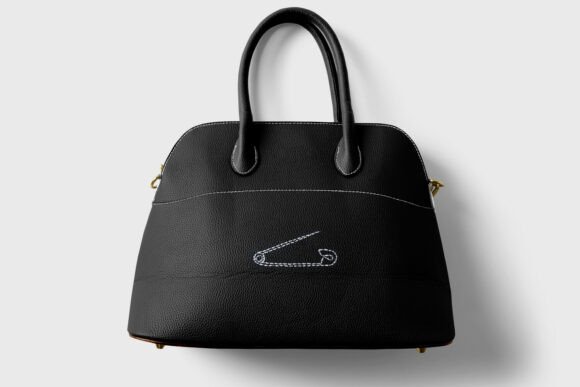
As an embroidery designer who’s tested hundreds of digital embroidery files for personalized gift shops and Etsy sellers, I opened Safety Pin Linework Embroidery expecting simplicity—and found quiet storytelling. The open safety pin is rendered in clean, confident linework: no fills, no shading, just a single continuous thread path that traces the curve of the clasp, the gentle arc of the body, and the subtle taper of the tip. It feels handmade without looking rustic, modern without feeling cold, and tender without tipping into sentimentality. This isn’t a clipart safety pin—it’s a thoughtful emblem. Its emotional resonance lands softly: protective, nurturing, quietly hopeful. That makes it ideal for Awareness-themed gifting—especially where care, support, or new beginnings are central.
Where It Shines: Real-World Uses for Personalized Gifts
I tested Safety Pin Linework Embroidery across seven common small-business product categories—and each time, it elevated the item’s perceived value:
- Baby embroidery: Stitched on organic cotton receiving blankets or muslin swaddles at 45 mm or 55 mm, it reads as sweet and symbolic—not cutesy. Perfect for NICU keepsakes or milestone gifts.
- Wedding gift: On linen pillow covers (75 mm) or monogrammed kitchen towels (65 mm), it adds understated elegance. Pair it with a couple’s initials or wedding date for a meaningful heirloom.
- Nursery decor: At 35 mm on a framed canvas or wall hanging, it complements minimalist Scandinavian or gender-neutral themes without overwhelming.
- Custom tote bags & aprons: At 85 mm on medium-weight canvas, the line remains crisp and legible—even after repeated washing and folding.
- Pillow covers & blanket embroidery: On textured fabrics like bouclé or chenille, the linework holds up beautifully when paired with lightweight cutaway stabilizer.
- Etsy listings & craft fair products: As a standalone design on kraft tags or printed mockups, it photographs cleanly—no busy background needed. Buyers instantly “get” its warmth.
- Personalized towels: On terry cloth, I used 65 mm with tear-away + light cutaway stabilizer—result: sharp edges, zero puckering, and excellent stitch retention.
Where to Use It Thoughtfully
This isn’t a “set and forget” embroidery file—and that’s a good thing. Its strength lies in intentionality. Use caution with:
- Stretchy baby clothes: Linework can distort on knit fabrics unless stabilized aggressively and hooped with minimal tension. Test first on jersey scraps.
- Dark fabric: Light thread colors may lack contrast. Always check your thread color against fabric under natural light before stitching.
- Thick, napped towels: At sizes over 75 mm, the line weight can blur slightly in dense pile. Stick to 65 mm or 75 mm for best clarity.
- Curved surfaces (like mugs or curved pillow inserts): Linework doesn’t wrap well. Reserve this design for flat or gently contoured items only.
- Products needing frequent washing: Confirm your thread is high-quality polyester and your stabilizer fully bonds. Linework relies on precision—loose stitches show more easily than filled motifs.
Why Customers Connect—And Why That Matters for Your Shop
Here’s what surprised me most: customers don’t just buy Safety Pin Linework Embroidery—they *assign meaning* to it. A baby shop owner told me her clients choose it for preemie bundles because “it says ‘we’ve got you’ without saying a word.” Wedding clients pair it with “forever” or “always” script fonts to imply security and commitment. That emotional resonance directly boosts giftability: people pay more for items that feel personal, intentional, and hand-selected—not mass-produced. For Etsy sellers and small shop owners, that translates to stronger product photography (the clean line pops in flat lays), higher engagement (customers comment “so meaningful!”), and repeat trust (“I know this shop chooses designs with heart”). It signals handmade quality—not because it’s complex, but because it’s considered.
Practical Embroidery Notes You Can’t Skip
Before stitching for a customer—or listing your first finished product—run these checks:
- Test on scrap fabric that matches your final product’s weight, texture, and stretch.
- Confirm hoop size compatibility—some formats (like PES or DST) may require larger hoops at 95 mm; verify your machine supports it.
- Review stitch density in your embroidery software. Linework should be smooth—not jagged or overly dense. If it looks choppy at 35 mm, zoom in: tiny jumps or overlapping stitches need editing.
- Use proper stabilizer: Lightweight cutaway for stable wovens, tear-away + light cutaway for terry, and water-soluble top for dark knits.
- Compare light and dark fabric mockups using your actual thread palette—contrast changes everything.
- Check small details after stitching: Does the pin tip land cleanly? Is the clasp opening distinct? Linework lives or dies by its endpoints.
- Confirm commercial licensing before selling finished products. Since this is an embroidery file, not a physical item, ensure your license permits resale of embroidered goods—especially for baby or wedding markets where copyright sensitivity runs high.
A Design That Grows With Your Business
Safety Pin Linework Embroidery isn’t flashy—but it’s reliable, emotionally intelligent, and quietly versatile. Whether you’re launching your first Etsy shop, expanding your baby product line, or adding wedding keepsakes to your boutique, this machine embroidery design earns its place in your core collection. It works across awareness themes without leaning on cliché, scales gracefully from delicate nursery tags to bold tote bags, and invites customers to pause, reflect, and feel seen. In a market flooded with novelty, sometimes the most powerful personalized gift is the one that says exactly what matters—in a single, graceful line.